
Developing Human Resources
Policy and Basic Approach
The Daiwa House Group Company Philosophy (Corporate Creed) states that “a company’s progress depends directly on ensuring a good working environment for its employees.” We believe that ensuring safe, healthy workplaces for our employees is essential for creating environments that encourage the growth of each employee and leverage their capabilities.
Given the shortage of workers due to the declining birthrate and aging population, people leaving the workplace to care for aging parents, and other problems, the human resources situation in Japan has become quite serious.
The Asset Manager will continue to advance work-style reforms, introduce new systems responding to changing social conditions and its own situation, and transform internal organizations and management with the aim of achieving maximized work performance and a safe and healthy work environment both physically and mentally for all employees.
5 Pillars of Human Capital Initiatives
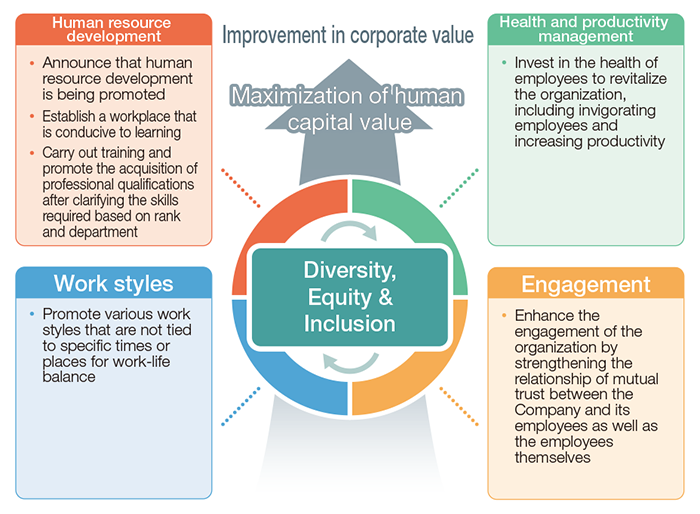
KPIs and Main Initiatives
| Qualification | Target for fiscal year ending March 2031 | Fiscal year ended March 2026 |
|---|---|---|
| Real Estate Transaction Agent | 100% | 90.6% |
| ARES (Association for Real Estate Securitization) Certified Master | 50% | 43.5% |
| Environmental Specialist Certification (Eco Test) | 100% | 77.6% |
Training Hours and Expenses for Officers and Employees
| Fiscal Year Ended March 2026 | |
|---|---|
| Training hours | 36.3 hours/person/year |
| Training expense | ¥100,695/person/year |
In-house Training Programs
In addition to face-to-face training by external instructors, the Asset Manager conducts face-to-face and e-learning training by officers and employees.
In terms of training content, we do not limit ourselves to training that “we want employees to receive,” but also conduct proprietary training that “employees want to receive” by having officers and employees serve as instructors and prepare training materials and tests based on questionnaires conducted with employees who will receive the training.
Training System and Schedule
The Asset Manager conducts training for all officers and employees, as well as by title and post (including fixed-term employees, temporary employees, and part-time employees), to develop the problem-solving skills of each individual and to improve their knowledge of business operations, human rights, harassment, and information security. The training system and annual results for the fiscal year ended March 2026 were as follows.
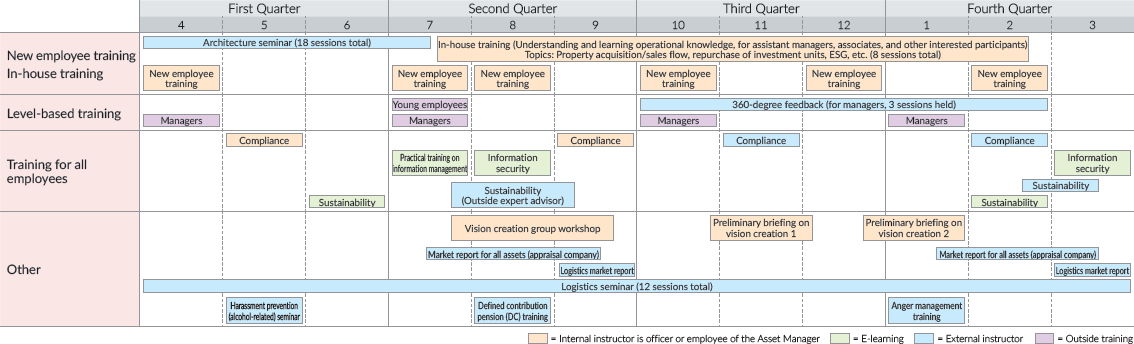
New Employee Training Program
The Asset Manager provides training to help new employees acquire operational knowledge as quickly as possible.
- Explanation of the operations of each department
- Compliance
- Insider trading regulations
- Human rights
- System-related risks
- Disaster prevention/crisis management
- CSR
- Basic knowledge related to buildings
- Basic knowledge related to J-REIT, etc.
Manager Training
The Asset Manager utilizes external training programs to strengthen essential management skills and leadership, which are crucial for managers.
By mutually focusing on the development of subordinates and improving productivity, we are committed to developing human resources to support the sustainable growth of DHR.
Training on Operational Expertise
The Asset Manager enlists the help of outside experts to provide training to officers and employees (including fixed-term employees, temporary employees and part-time employees).
Unit: Number of training sessions
| Item | Fiscal year ended March 2023 | Fiscal year ended March 2024 | Fiscal year ended March 2025 | Fiscal year ended March 2026 |
|---|---|---|---|---|
| Sustainability training | 4 | 4 | 4 | 4 |
| Training for general managers and above | 1 | 2 | 2 | 2 |
| Training for senior managers and group leaders | 4 | 0 | 7 | 3 |
| Middle-management employee training | 6 | 0 | 1 | 0 |
| OJT trainer training | 7 | 2 | 0 | 0 |
| Young employee training | 2 | 2 | 2 | 0 |
| New employee training | 2 | 7 | 8 | 7 |
| Real estate market training | 4 | 6 | 4 | 4 |
| Architectural training | 9 | 3 | 18 | 9 |
| In-house training | 9 | 12 | 8 | 8 |
Target Management and Performance Evaluation Program
The Asset Manager has implemented a “Target Management and Performance Evaluation Program” to be conducted every six months, with the following objectives:
(1) To foster communication between superiors and subordinates
(2) To strengthen human resource development
(3) To increase motivation with respect to roles and results (performance)
(4) To clarify evaluation criteria and gain better understanding of evaluations
Employee performance evaluations are determined by evaluation of performance benchmarked against individualized targets, evaluation of skills/conduct, a compliance evaluation, and ESG initiatives in response to societal demands, etc. The issues for improvement are shared through the performance review and follow-up interviews.
In addition, starting in the fiscal year ending March 2027, “obtaining the Environmental Specialist Certification (Eco Test)” has been established as a recommended requirement for promotion evaluations at the Asset Manager.
Self-Assessment Interview Program
Interviews about target management and performance evaluations conducted by the Asset Manager tend to focus on short-term challenges, such as how targets will be achieved for the current period. Therefore, DHR has introduced and implemented a self-assessment interview program for all employees (excluding executive officers, compliance officers, general managers, and fixed-term employees) once a year for the purpose of creating opportunities as a company to understand the long-term career vision toward the future or the hope and intentions of each employee about particular work that they want to experience, which can then be reflected in the treatment, assignments and development of the employee as well as workplace improvements and other human resource policies.
These interviews focus on topics other than work targets, such as career visions, health, stress, and any concerns an employee might have. It also confirms the intentions for the future of each employee, such as future work that they would like to experience and where they would like to be in that future.
Support for Operational Skills Development and Training
The Asset Manager has established a system for providing funding for the registration and renewal of professional qualifications and a system for providing congratulatory payments for acquiring professional qualifications to encourage the acquisition of knowledge, qualifications, and licenses. The purpose is to increase the motivation of all employees (including fixed-term employees, temporary employees, and part-time employees) with respect to self-development, improve their abilities and talents, continuously and steadily secure human resources with the specialized skills necessary to contribute to the achievement of business objectives, and assess the environmental friendliness of DHR’s properties.
Number of the Asset Manager Employees with Qualifications
(Total of 85 officers and employees as of March 31, 2026)
| Item | Number of people with qualifications (*) |
|---|---|
| Real Estate Transaction Agent | 77 |
| ARES (Association for Real Estate Securitization) Certified Master | 37 |
| Certified Real Estate Consulting Master | 9 |
| Office Building Manager | 14 |
| Real Estate Appraiser | 1 |
| First-Class Architect | 2 |
| CASBEE Accredited Professional for Buildings | 1 |
| CASBEE Accredited Professional for Real Estate | 4 |
| Certified Internal Auditor | 2 |
| TOEIC score of 700+ | 8 |
| Environmental Specialist Certification (Eco Test) | 66 |
- Includes those who have passed the credentialing exam but are not yet credentialed.
Violations/Accidents by Officers and Employees
There were no significant violations committed by or accidents involving the Asset Manager’s officers and employees that would influence stakeholders. (Fiscal year ended March 2026)
Diversity, Equity & Inclusion, Work Styles and Employee Engagement
Policy and Basic Approach
For the Daiwa House Group to grow into a corporate capable of contributing to the world, it is important to respond flexibly to diverse values and ongoing changes in society, and to create new value to allow us to discover potential markets. Toward that end, we must foster a workplace climate that makes it possible to capitalize on the perspectives and creativity stemming from employees’ diverse values, gender, age, ethnicity, language, culture, disabilities, lifestyles, and other attributes in order to form organizations that generate new ideas without being held back by outdated notions and preconceptions.
We are making efforts to promote active participation by women and otherwise strengthen diversity-based management and to build an organization that enables flexible work styles so that a broader range of human resources can flourish in the future.
KPIs and Main Initiatives
| Item | Target for fiscal year ending March 2031 | Fiscal year ended March 2026 | |
|---|---|---|---|
| Diversity, equity, and inclusion | |||
| Percentage of female managers (senior manager and above) | 39% | 23.1% | |
| Percentage of female line managers (group leader and above) | 20% | 22.2% | |
| Work styles (work-life balance) | |||
| Percentage of male employees taking childcare leave | 100% | 50.0% | |
| Percentage of paid leave taken | 85% | 70.8% | |
| Average overtime hours | - | 17.2 hours | |
| Engagement | |||
| eNPS score | -8 or more | -22 | |
| Turnover | 0% | 3.8% | |
| Average tenure of employees | 10 years or more | 7.3 years | |
eNPS Surveys and Satisfaction Assessments
We believe that the growth of the Asset Manager’s employees directly contributes to the growth of DHR. To enhance employee satisfaction, we continuously conduct eNPS surveys and satisfaction assessments through third-party organizations. These surveys target all officers and employees, including fixed-term employees, temporary employees, and part-time employees.
Our score for the fiscal year ended March 2026 was -22. We provide feedback on the survey results to all officers and employees and incorporate the findings into future improvements, working toward the creation of an even better workplace environment.
- The Employee Net Promoter Score is an index for visualizing the loyalty of employees. This index evaluates eleven levels of employee loyalty through the survey question asking, “How likely are you to recommend our organization to your family, friends, or other acquaintances who want to find or change jobs in the same industry as your company?”
The eNPS score classifies employees who gave a score of 9-10 as “Promoters,” those who gave a score of 7-8 as “Passives,” and those who gave a score of 0-6 as “Detractors.” The eNPS score is calculated by subtracting the percentage of Detractors from the percentage of Promoters among all respondents. The more “Promoters” there are, the higher the score will be.
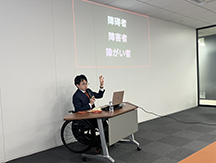
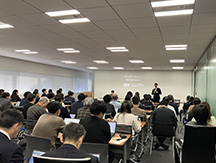
Image from a diversity training event at the Asset Manager
360-Degree Feedback
As part of its human capital management (human resource development) initiatives, the Asset Manager conducted 360-degree feedback for non-managers in FY2025 following the implementation of the program for managers in FY2024. We provided support designed to promote self-awareness and encourage behavioral change through feedback from multiple perspectives, including supervisors, colleagues, and subordinates.
Distribution and Utilization of Engagement Book
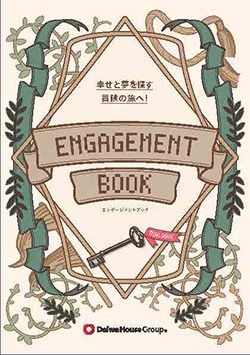
To contribute to the realization of the Daiwa House Group’s long-term purpose, we distribute the “Engagement Book” to all officers and employees with the aim of improving the workplace environment and organizational culture. During morning meetings, we conduct a group reading session of the Book and have each person share their thoughts on “actions.” This serves as an opportunity for employees to reflect on their own words and actions, identify organizational challenges, and gain insights into how to create a workplace where people want to work.
Conducting Training (Workshop) Led by Outside Expert Advisors
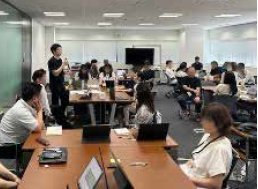
The Asset Manager receives annual training from outside expert advisors serving on the Sustainability Committee. In the fiscal year ended March 2026, we held a workshop under the theme “Toward Sustainability Management: From Empathy to Action,” for management and employees to learn about sustainability management.
Additionally, following the training, we served a sustainable lunch made with organic ingredients and fair-trade seasonings, served in plastic-free containers, to provide an opportunity for participants to reflect on the training and foster communication among employees.
Training participants shared comments such as, “It was helpful to think about things from a business perspective,” “The group work that brought together people from different positions and departments was very meaningful,” and “I was able to identify issues and improvement strategies that I hadn’t noticed on my own.”
Promotion of Employment of Seniors
The Asset Manager accepts human resources with a wealth of experience in real estate transactions, leasing management, financial affairs, system management, etc. from the sponsor.
Human Resources Dispatched from Sponsor
The Asset Manager has received from the sponsor human resources with a wealth of experience in areas such as real estate sales transactions, leasing, property management, finance and IT system operations.
Benefits and Welfare
The Daiwa House Group recognizes the importance of promoting good health among its workforce and thereby improving labor productivity through consistent measures to eliminate excessively long working hours and help employees manage their health. Based on such recognition, the Asset Manager has introduced employee leave/vacation programs such as the ones below, in addition to celebratory event leave, bereavement leave, maternity/paternity leave, childcare leave* and elder caregiving leave* for all employees.
- Contract workers can also take advantage of these programs.
| Item | Overview |
|---|---|
| Special paid vacation | Up to five days per year separately from annual paid vacation to promote employees’ health, etc. |
| Accumulated paid vacation | Unused annual paid vacation days accumulate up to 20 days per year to a maximum of 100 days. Employees may use their accumulated paid vacation days as personal injury/sick leave, maternity/paternity leave, family caregiving leave or community co-creation leave |
| Leave for child caregiving, etc. | Five days per year for child caregiving, vaccinations/health checkups, attendance at enrollment and graduation ceremonies, etc. (paid leave) |
| Family caregiving leave | Five days per year to care for ill family members (paid leave) |
| Community co-creation leave | Five days per year to participate in activities that contribute to society, training for such activities, etc. (paid leave) |
Wellness Leave System
From the perspective of diversity, the name and details of the former “menstrual leave” were revised so that both male and female employees can take the leave.
| Scope of coverage (the purpose of the leave does not need to be specified at the time of application) |
Maximum days |
|---|---|
|
15 days/year (paid)(*2) |
- Periods or hours beyond the limit may be taken as unpaid leave.
- Granted in addition to annual paid leave.
Flextime System
- Start and end times are set between 7:30 to 21:00 on a daily basis
- Minimum of 1 hour and maximum of 12.5 hours of work per day (no core hours are set)
- Accommodating flexible work styles by allowing voluntary breaks (time taken off from work during scheduled working hours and returning to work again)
Telecommuting System
The Asset Manager allows all officers and employees to work from home (telecommuting), regardless of whether they are engaged in childcare, caregiving, or other personal circumstances. There are no specific restrictions on the number of telecommuting days or frequency of use. Employees are expected to exercise responsibility in using telecommuting as needed, while maintaining communication within their departments, with the goal of maximizing individual performance.
Provision of Childbirth Benefits
- Eligibility:
- Employees or their spouses (including same-sex partners)
- Contents:
- A payment of 300,000 yen per newborn
Provision of Return-to-work Benefits
Promoting the return of female employees to work after maternity leave
- Eligibility:
- female employees who have taken childcare leave and returned to work
- Contents:
-
Leave duration Return-to-work benefits Less than 3 months after childbirth 1 million yen More than 3 months, but less than 1 year after childbirth 500,000 yen More than 1 year after childbirth 300,000 yen
Provision of Childcare Leave Benefits
Promoting male employees to take childcare leave
- Eligibility:
- male employees who have taken childcare leave
- Contents:
-
Number of days of childcare leave taken Childcare leave benefits 30 days or more 300,000 yen 10 to less than 30 days 200,000 yen 1 to less than 10 days 100,000 yen
Allowance for Replacing Work of Coworkers on Long-term Leave
- Provided to employees who perform work as substitutes during the absence of persons on long-term leave, such as childcare leave, caregiver leave and medical leave
- Promotes a greater sense of understanding and unity overall in the workplace by easing the concerns of persons on long-term leave regarding the burden placed on their coworkers and by appropriately compensating the employees who support the workplace in their absence
- Payments to coworkers who support the workplace in their absence are up to a maximum monthly amount of 50,000 yen per person and are limited to the amount of unpaid bonuses for the person on leave and to the period during which a replacement worker has not been employed
Introduction of welfare facility program
As part of employee welfare benefits, the Asset Manager has entered into a welfare facility agreement with a hotel management company in the Daiwa House Group. All officers and employees and their families (up to the second degree of kinship) are eligible to use 77 Daiwa Roynet Hotels nationwide throughout the year, with the exception of certain blackout dates.
Establishment of Consultation Desk for Sexual Minorities (LGBT)
In order to create social value though its businesses, the Daiwa House Group operates based on “respect for human rights” of all stakeholders, including its employees, customers and business partners, with the goal of sustainable management that can continually realize diversity, equity, and inclusion.
To create an environment where diversified talented people can demonstrate their abilities by drawing on their individuality, we have established an external contact point to which all the officers and employees of the Daiwa House Group, including staffers, fixed-term employees, contract workers, and part-time employees, can contact for a consultation to relieve their anxieties caused by issues of LGBT.
- Personal information is protected even at the external consultation desk. Furthermore, we will never disclose any information inside or outside of the company without the consent of the person contacting the consultation desk.
- If an internal response is necessary, it will be handled in accordance with the Daiwa House Group Whistleblowing Regulations upon consent of the person consulted.
Personnel Data
| Item | Fiscal year ended March 2023 | Fiscal year ended March 2024 | Fiscal year ended March 2025 | Fiscal year ended March 2026 |
|---|---|---|---|---|
| Total personnel*1 | 70 | 69 | 74 | 79 |
| Male ratio | 64.3% | 63.8% | 62.2% | 60.8% |
| Female ratio | 35.7% | 36.2% | 37.8% | 39.2% |
| Manager*1 *2 | 29 | 28 | 27 | 26 |
| Male ratio | 79.3% | 78.6% | 74.1% | 76.9% |
| Female ratio | 20.7% | 21.4% | 25.9% | 23.1% |
| New hires | 0 | 10 | 5 | 8 |
| Male ratio | - | 50.0% | 60.0% | 50.0% |
| Female ratio | - | 50.0% | 40.0% | 50.0% |
| Job leavers | 1 | 3 | 3 | 3 |
| Average tenure | 5.6 years | 6.0 years | 6.5 years | 7.3 years |
| Male personnel | 5.5 years | 6.1 years | 6.9 years | 7.8 years |
| Female personnel | 5.6 years | 5.9 years | 6.0 years | 6.6 years |
| Number of employees who took childcare leave*3 | ||||
| Male personnel | 75.0% | 100% | 75.0% | 50.0% |
| Female personnel | 100% | 100% | 100% | 100% |
| Return rate of employees to work after childcare leave | ||||
| Male personnel | 100% | 100% | 100% | 100% |
| Female personnel | 0.0% | 66.7% | 100% | 60.0% |
| M&As | 0 | 0 | 0 | 0 |
| Employee lay offs | 0 | 0 | 0 | 0 |
| Number of employees aged 60 and older | 2 | 4 | 6 | 6 |
| Number of employees who are foreign nationals | 0 | 0 | 0 | 0 |
| Number of employees belonging to ethnic minorities | 0 | 0 | 0 | 0 |
| Number of employees with disabilities | 0 | 0 | 0 | 0 |
| Average days of annual paid vacation taken / paid vacation usage rate | 13.6 days / 72.4% | 14.6 days / 74.9% | 11.3 days / 66.1% | 13.2 days / 70.8% |
| Number of employees who took elder caregiving leave | 1 | 4 | 4 | 2 |
| Number of employees who took caregiver leave | - | - | - | 1 |
| Number of employees who took wellness leave | - | Not calculated | Not calculated | 29 |
| Occupational accident frequency rate*4 | 0.0% | 0.0% | 0.0% | 0.0% |
- Headcounts are as of April 1 of each fiscal year.
- Senior manager and above.
- The year a child is born and the year parental leave is taken do not necessarily coincide, which may result in a percentage exceeding 100%.
- Occupational accident frequency rate = (occupational injuries/fatalities ÷ total actual hours worked) × 1,000,000
Introduction of Cumulative Investment Unit Investment Program
In December 2013, the Asset Manager introduced a cumulative investment unit investment program in the aim of increasing the price of DHR investment units and further improving growth of DHR and medium- to long-term investor value by having officers and employees of the Asset Manager pay close attention to investment unit prices of DHR and raising their awareness of performance.
Introduction of Investment Unit Ownership Program
In November 2019, the Asset Manager introduced an investment unit ownership program of DHR for its officers and employees in response to the Japan Securities Dealers Association’s issuance of guidelines on investment unit ownership programs in May 2018.
Also, we have introduced an investment unit ownership program for the officers and employees of Daiwa House, as well as the employees of Daiwa House Realty Mgt. and Daiwa Roynet Hotels, with the aim of providing them with an opportunity to invest in DHR units, fostering a greater focus on improving DHR business performance and sustainable growth, thereby enhancing unitholder value over the medium to long term.
We will continue to encourage participation in the investment unit ownership program within the Daiwa House Group as we move forward.
- The investment unit ownership program for the officers of Daiwa House was introduced in November 2018, for the employees of Daiwa House in June 2020, and for the employees of Daiwa House Realty Mgt. and Daiwa Roynet Hotels in December 2025.
Granting Investment Units of DHR to Asset Manager Employees
To commemorate the 20th anniversary of the Asset Manager’s establishment on September 1, 2024, the Asset Manager provided a special incentive equivalent to one investment unit of DHR to employees who participate in the DHR investment unit ownership program through the contribution of funding to the program. Through this, the Asset Manager aims to achieve a 100% participation rate of employees in the DHR investment unit ownership program, so that the employees will make further efforts to improve the DHR investment unit price by paying attention to trends in the DHR investment unit price and the earnings more closely for the sake of further growth of DHR and improvement of unitholder value over the medium to long term.
Human Rights
Human Rights Policy and Approach
The Daiwa House Group Principles of Corporate Ethics stipulate “We respect basic human rights and the dignity of all people, and do not discriminate against anyone on the grounds of race, nationality, ethnicity, gender, sexual orientation, sexual identity, disability, age, creed, or social status.” In January 2018, the group established the Human Rights Policy of Daiwa House Group with understanding the corporate responsibility of respecting human rights as set forth in the UN Guiding Principles on Business and Human Rights.After receiving advice from outside experts, this policy was established by resolution of the Daiwa House Board of Directors in December 2017.
KPIs and Main Initiatives
Number of Reports About Labor-related Issues, Discrimination, Harassment, etc.
| Fiscal year ended March 2023 | Fiscal year ended March 2024 | Fiscal year ended March 2025 | Fiscal year ended March 2026 |
|---|---|---|---|
| 0 | 1 | 0 | 0 |
Number of cases in which the Asset Manager received reports and took corrective action
| Fiscal year ended March 2023 | Fiscal year ended March 2024 | Fiscal year ended March 2025 | Fiscal year ended March 2026 |
|---|---|---|---|
| 0 | 1 | 0 | 0 |
Relevant Training
| Fiscal year ended March 2023 |
Fiscal year ended March 2024 |
Fiscal year ended March 2025 |
Fiscal year ended March 2026 |
|||||
|---|---|---|---|---|---|---|---|---|
| Times held | Total hours/person | Times held | Total hours/person | Times held | Total hours/person | Times held | Total hours/person | |
| Training on human rights and diversity | 1 | 4.0 | 1 | 1 | 1 | 1.5 | 1 | 1.5 |
| Training on bullying and harassment | 1 | 0.75 | 0 | 0 | 0 | 0 | 1 | 0.5 |
Human Rights Policy of Daiwa House Group
The Daiwa House Group co-exists with society through its business and co-exists with the people living in society through its products and services. We will continue to carry ourselves with this “co-creation and co-existence” approach and believe it is imperative to build an honest relationship with society. The Human Rights Policy of the Daiwa House Group (hereinafter referred to as the “Policy”) expresses our commitment to the respect of human rights based on this concept, which complements the Daiwa House Group’s CSR Guidelines, the Principles of Corporate Ethics and the Code of Conduct.
Our Commitment to the Respect for Human Rights
As a group that co-creates value for individuals, communities and people’s lifestyles, the Daiwa House Group will contribute to the realization of a society built on the respect for human rights through its businesses.
Compliance with the Laws and Norms Pertaining to Human Right
The Daiwa House Group supports and respects the international norms on human rights, including the “International Bill of Human Rights*” which stipulates the fundamental human rights that all people in the world should enjoy, as well as the “ILO Declaration on Fundamental Principles and Rights at Work” of the International Labour Organization (ILO), which stipulates fundamental rights at work. Furthermore, in accordance with the “Guiding Principles on Business and Human Rights” of the United Nations, we shall strive to discharge our responsibility on the respect for human rights through our response to negative impacts against human rights that may occur in our business operations and transactions.
Daiwa House Group shall observe the laws of each country and region in which we operate our business activities.Whenever there is a contradiction between the laws of such country and region and the human rights as recognized internationally, we shall pursue the way to respect the international principles of human rights, while observing the local laws.
This policy applies to all officers and employees of the Daiwa House Group (including Daiwa House and its consolidated subsidiary, the Asset Manager). We also expect our business partners and other related parties to observe the Policy while working with Daiwa House Group.
- The Universal Declaration of Human Rights, the International Covenant on Civil and Political Rights and the International Covenant on Economic, Social, and Cultural Rights
Approach on the Promotion of Respect for Human Rights
Continuous Execution of Due Diligence on Human Rights
Daiwa House Group shall continuously pursue our commitment to the respect for human rights, based on the “Guiding Principles on Business and Human Rights” of the United Nations, by incorporating the due diligence on human rights in our business activities as their essential process.
As such, whenever we discover that Daiwa House Group directly caused negative impact on human rights, or indirectly became involved therein, we shall adequately undertake the remedial and correctional actions through appropriate procedures in and out of the company. As to the effects of our undertaking, we shall continuously review the same and announce them.
Daiwa House Group shall be executing the due diligence on human rights by utilizing the formats based on each of the existing policies and guidelines regarding our business activities, and shall respect the human rights of stakeholders.
[Respect for Human Rights of our Customers]
Daiwa House Group is providing buildings and a variety of merchandise.Buildings are the ones to protect people’s life, health, assets and comfortable living, and it is our duty to provide safe and secure buildings.
Therefore, we strive to provide conforming articles by performing strict quality control for the safety of our merchandise. We also shall not engage in any discrimination in our sales activities and business operations, nor any conduct to facilitate discrimination. We shall cultivate a better understanding through dialogues with our customers and reflect this understanding in improvement of our merchandise, services and communications.
[Respect for Human Rights of our Employees]
Daiwa House Group shall always aim to be a company where everyone can work with high motivation, with his/her human rights respected, by stipulating the prohibition of discrimination, respect for diversity, and safe labor environment in the various policies and code of conduct about employees, and thereby realizing the responsible labor practice.
[Respect for Human Rights of our Business Partners]
Daiwa House Group considers trading counterparts such as suppliers and construction companies as our important business partners, and respects the rights of workers.We shall also require our business partners to respect the human rights of those who are influenced in the supply chains, and not to infringe upon the rights.
[Respect for Human Rights of the People in the Community]
Daiwa House Group shall engage in business activities towards the realization of the society that respects human rights, with the understanding that the company itself can contribute as a member thereof, and shall aim at coexistence with the local community. In addition, beyond ourselves, when our business partners should cause negative impacts on the human rights of the people of the local community, we shall require these partners to respect human rights and not to infringe upon them, by properly mobilizing the influence that our Group has.
Dialogue and Consultation with Stakeholders
Daiwa House Group shall strive to have dialogues and consultations with the stakeholders so as to understand the influence that our business activities may bear upon human rights from the viewpoint of those affected and to address and improve it. Furthermore, by setting up a channel through which various stakeholders can consult and report, we shall try to grasp the negative impacts on human rights.
Education
Daiwa House Group shall be conducting adequate education and training so that all relevant parties involved in the business activities understand this Policy and human rights are respected to good effect throughout our business activities.
Report
Daiwa House Group will report on its efforts to ensure respect for human rights on its website and in its Sustainability Report.
Human Rights Due Diligence Process
The Asset Manager considers the risks related to the respect for human rights for DHR, the Asset Manager, contractors, and activities related to the value chain and business through the “risk assessment sheet,” which is updated annually. Furthermore, preventive measures, control assessments, and response measures are formulated after evaluating risks, taking into account the likelihood of risk occurrence and the degree of impact.
In the “risk assessment sheet,” we identify and manage risks related to health and safety (employees, suppliers, contractors, and communities), child labor, freedom of association, labor management (forced labor), and compensation by identifying risk items related to human rights. Groups exposed to human rights-related risks include employees, women, children, and communities.
The General Managers of each department of the Asset Manager conducts a self-check of the risk management status twice a year, and the Compliance Officer reports the results of the self-checks and verifications to the President and CEO, the Compliance Committee, and the Board of Directors of the Asset Manager twice a year.
Hotline
Since 2004, the Daiwa House Group has been operating a hotline for in-house whistleblowing and consultation, while implementing regulations to protect whistleblowers (current Daiwa House Group Internal Reporting Regulations). The hotline is available and the regulations are applicable to all group employees regardless of their type of employment.In 2020, the service was renamed the “Corporate Ethics and Human Rights Hotline.” The hotline accepts not only reports of suspected or confirmed cases of breach but also reports of, and request for help and advice on, a variety of workplace- or human rights-related problems, thereby contributing to early detection and resolution of such problems.
In the process of working toward resolution, whistleblowing is accepted under anonymity. In the factual confirmation and investigation, privacy of not only the consulter but also employee(s) in question and third parties who cooperate in the investigation is respected. Along with such actions, hearings are held with the parties involved under strict confidentiality, and appropriate measures are taken to prevent recurrence. Once the problem has been resolved, a follow-up investigation is carried out to ensure, in some cases, that the reporter will not be subject to retaliatory treatment or that improvements have been made, thus always protecting hotline users.
As measures for recurrence prevention, information is shared among related worksites and departments via the persons in charge of the hotline at worksites to raise general awareness of the risks. Training programs are also organized to draw attention to such issues. In addition, points of contact for consultation for group employees have been put in place at the Sustainability Planning, Legal, and Human Resources Departments of Daiwa House, facilitating the detection of legal irregularities, violations of human rights, workplace problems, and the like. Several contact points are available within the company to lower the psychological barrier that employees may feel about reporting or seeking advice, thus easing the way for them to reach out at an early stage.
In addition, as with the Corporate Ethics and Human Rights Hotline, we accept issues relating to human rights via the Partners Hotline, which is a whistleblowing system for reports from business partners concerning the relationship between Daiwa House Group employees and business partners.
Human Rights Awareness Training
The Daiwa House Group focuses on human rights awareness training with the aim of ensuring that employees acquire correct knowledge , and all employees of the entire Group, including those in management positions, attend human rights awareness training at least once a year.
Response to Harassment, etc.
In the internal regulations of the Compliance Manual, the Asset Manager states that every officer and employee shall respect human rights and individuality and shall never discriminate based on nationality, gender, origin, religion, creed, health, physical traits, or for any other reason or engage in any action which can be construed as sexual, power, or any other form of harassment.
A consultation desk to handle any inquires or claims about harassment has been set up under the supervision of the General Manager of the Administration and Accounting Department with one male and one female staff member appointed as persons in charge of this consultation desk. Any employee, not limited to victims of harassment, can consult or submit a claim to the person in charge of this consultation desk if there is a risk of harassment. The person in charge of the consultation desk will confirm the factual nature of the information and report the incident to the General Manager of the Administration and Accounting Department and the Compliance Officer.The Asset Manager (General Manager of the Administration and Accounting Department) shall take necessary measures to improve the working conditions and environment for the victim, such as transferring the aggressor, in addition to disciplinary action to adequately prevent the recurrence of such harassment thorough awareness-raising and training on harassment, identifying the causes of the incident and addressing them to prevent any such harassment from happening again. Additionally, the persons in charge of this consultation desk should protect the privacy of all related parties when responding to a consultation or claim and never disadvantage anyone for reasons such as consulting or cooperating in confirming the factual nature of the incident.
Response to Human Rights
The Asset Manager further solidified this commitment by signing on to the United Nations Global Compact, which states “the elimination of all forms of forced and compulsory labour,” “the effective abolition of child labour” and “the elimination of discrimination in respect of employment and occupation” as part of its principles.
The Asset Manager also conducts regular training on human rights with the aim to realize a workplace and society free of discrimination where diverse human resources can play an active role by gaining a better understanding of minority issues, such as those related to sexual minorities (LGBT), persons with disabilities, foreign labor, and the Buraku issue.
Obtained Universal Manners certification
As part of its human rights training program, the Asset Manager participated in the Universal Manners certification training organized by the Japan Universal Manners Association. The goal of this training was to deepen understanding of diverse groups of people, including those with disabilities; to gain insight into the perspectives of others who are different from oneself; and to foster a sense of personal connection so that employees can act with consideration. All officers and employees* received Level 3 Universal Manners certificate. Officers and employees who participated in the training shared comments such as, “As someone who works in real estate, I realized I hadn’t been considering the perspective of people with disabilities during emergencies,” and “I want to apply what I’ve learned not only at work but also in my daily life.”
- Officers and employees as of December 2025
Labor Standards
Labor/Management Relations
The Asset Manager has not yet organized a labor union but does recognize the constitutional right of every employee to have “freedom of association.” The Asset Manager has also signed and made a commitment to adhering to the United Nations Global Compact, one of whose principles is “the freedom of association and the effective recognition of the right to collective bargaining.”
Labor-management relations at the Asset Manager have been harmonious, and there have been no large-scale mergers, acquisitions, or layoffs in the past three years.
In addition, the Asset Manager has entered into a labor-management agreement on overtime work (36 Agreement) with its employees, and striven to maintain the health of its employees by appropriately managing working hours.
Overwork
The Asset Manager conducts mandatory health examinations through industrial physicians for anyone who works more than 80 hours of overtime per month.
Payment of Wages Above Minimum Wage and Equal Pay for Equal Work
The Asset Manager pays wages that are above the minimum wage set by laws and regulations and allow for a higher standard of living by taking into account the commodity prices. Our compensation system also maintains equal pay for equal work and ensures no wage gap between genders. Compensation is based on an evaluation-linked pay system by post classification, and appropriate assessments of performance are conducted by verifying the fairness and validity of the primary evaluation and final evaluation during the personnel appraisal process. Bonuses are paid twice a year in the summer and the winter, and the amount is determined according to work performance. In 2025, the average annual salary per employee at the Asset Manager was ¥11,397 thousand*1, and the ratio of female to male compensation was 74.7%*2.
- Average for full-time employees not including officers, fixed-term employees, or employees on external assignment (incoming).
- Calculation method: Average salary of female employees divided by average salary of male employees.
Labor-related Violations and Accidents
The Asset Manager had no significant labor-related violations or accidents that would influence stakeholders. (Fiscal year ended March 2026)
Initiatives for Health Management
Policy and Basic Approach
Under our Sustainability Policy, the Asset Manager will establish an internal framework for promoting sustainability, take steps to develop human resources by conducting regular education and training for employees, and aim to create workplaces where people can work safely and healthily, and workplaces where diverse employees can work flexibly.
Based on this philosophy and policy, initiatives to promote employee health will improve their vitality and productivity and otherwise invigorate the entire organization, leading to improved business performance and greater value for the organization.
Health Declaration (September 2022)
- Promote work-life balance
- Improve health literacy
- Promote regular health checkups (especially secondary checkups for individuals who have not gotten them)
- Prevent the spread of disease thoroughly
KPIs and Main Initiatives
The Asset Manager aims to fulfill a Health Declaration by strengthening the health management system and through measures to enable each and every employee to work with a high level of health awareness so that they can stay healthy and active over the long term.
Health Data
| Item | Target for fiscal year ending March 2031 | Fiscal year ended March 2023 | Fiscal year ended March 2024 | Fiscal year ended March 2025 | Fiscal year ended March 2026 |
|---|---|---|---|---|---|
| Percentage of personnel who had regular health checkups | 100% | 100% | 100% | 100% | 100% |
| Percentage of personnel who received metabolic syndrome-specific health guidance*1 | 100% | 100% | 100% | 100% | 100% |
| Percentage of smokers | 8% | 9% | 14% | 12% | 10% |
| Percentage of personnel who exercise regularly*2 | 30% | 20% | 33% | 29% | 34% |
| Percentage of personnel who drink alcohol responsibly*3 | 65% | 51% | 48% | 38% | 34% |
| Percentage of personnel who get sufficient sleep | 85% | 77% | 81% | 85% | 78% |
| Percentage of personnel who had stress checks | 100% | 100% | 100% | 100% | 100% |
- Percentage of personnel who completed metabolic syndrome-specific health guidance based on the results of their regular health checkups
- Percentage of personnel who exercise for at least 30 minutes at least twice a week for at least one year
- Percentage of personnel who drink less than 180 mL of alcoholic beverage (the appropriate amount) when they drink
Data Showing the Benefits of Health Management to Corporate Management
| Item | Fiscal year ended March 2023 | Fiscal year ended March 2024 | Fiscal year ended March 2025 | Fiscal year ended March 2026 |
|---|---|---|---|---|
| Sales of Asset Manager | ¥4,456 million | ¥5,135 million | ¥5,250 million | ¥5,720 million |
| Turnover*1 | 1.4% | 4.3% | 4.1% | 3.8% |
| Monthly average overtime hours | 16.5 hours | 14.4 hours | 16.7 hours | 17.2 hours |
- Turnover is the ratio of job leavers to total personnel using total personnel as of April 1 of each fiscal year. Sales, turnover, and monthly average overtime hours were identified as data that would show the benefits of health management on corporate management. Although monthly average overtime hours have gone up, sales have increased and turnover has decreased, demonstrating the benefits of the initiatives.
Data on Improvement on Health Issues
| Item | Fiscal year ended March 2023 | Fiscal year ended March 2024 | Fiscal year ended March 2025 | Fiscal year ended March 2026 |
|---|---|---|---|---|
| Percentage of personnel with remarks on their health checkups | 54.4% | 48.5% | 52.6% | 53.2% |
The percentage of personnel with remarks on their health checkups was identified as data that would show improvement on health issues. The figure represents a 10.5 percentage point improvement on the figure for the fiscal year ended March 2020, when we began monitoring.
Health Management Promotion System
The Sustainability Committee is chaired by the President and CEO and led by General Manager of Well-being Department, Administration and Accounting Division as the operating officer. The committee meets once a month and deliberates and resolves on policy, strategy development, and operations related to sustainability, which includes KENKO Investment for Health. The committee also reports on these matters to the Board of Directors as necessary.
Establishment of Health Committee
The Asset Manager has established a Health Committee that meets monthly to exchange opinions on the workplace environment and learn about health with the industrial physician in order to prevent health problems among officers and employees and maintain and promote their health.
Promoting Regular Health Checkups (Especially Secondary Checkups for Individuals Who Have Not Gotten Them)
The Asset Manager aims to have 100% of employees get regular health checkups and is committed to thorough follow-up by working with health insurance associations and workplaces to promote secondary examinations, checking whether employees have received health guidance, and more.
Due to these efforts, the participation rate for regular health checkups was 100% and the participation rate for metabolic syndrome-specific health guidance was 100% for the fiscal year ended March 2026.
Collaborative Efforts with Health Insurance Associations to Improve on Health-Related Issues
The Daiwa House Group worked with health insurance associations to introduce a Health Analysis System in a proactive effort to promote employee health. The system analyzes employee health in organizational units and based on attributes, and the results are used to identify organizational issues (areas of improvement in officers and employees’ lifestyles).
Specifically, 11 items from health checkup results (including BMI, waist measurement, blood pressure (systolic and diastolic), triglycerides, etc.) and 10 items from interviews during the checkups (smoking habits, exercise habits, breakfast habits, frequency and volume of alcohol consumption, sleep habits, etc.) are assigned point values, which allow the averages to be compared within companies and the Group to give people an easy way to see what needs to be improved.
Improving Health Literacy
Every month, the industrial physician of the Health Committee disseminates “Notes on Health Tips” to all officers and employees. The notes include columns and health information tailored to the season. The notes include columns and health information tailored to the season. The aim is to provide safety and health education to employees and improve their health literacy.
Additionally, the radio calisthenics program broadcast at the same time every morning is leading to improved employee health and vitality.
Individual Health Management Measures (fiscal year ended March 2026)
| Item | Result | Amount invested |
|---|---|---|
| Radio calisthenics | 242 times | - |
| Distributing free passes to sports clubs | 100 passes | ¥330 thousand |
Flu Vaccination Subsidy
As part of our KENKO Investment for Health and employee welfare benefits, the Asset Manager provides a subsidy* to officers and employees who wish to receive flu vaccinations, with the aim of promoting their health.
- Subject to certain conditions.
Brain Health Checkup Subsidy
As part of our commitment to KENKO Investment for Health and employee welfare benefits, since FY2024 the Asset Manager has been covering the cost of a brain health checkup, an examination that helps facilitate the early detection of brain abnormalities that could lead to serious illness, for officers and employees who wish to participate.
Implementation of Smoking Cessation Clinic Program
As part of the Daiwa House Group’s health and wellness project, we implemented a Smoking Cessation Clinic Program for participants seeking smoking cessation support. The program is fully subsidized (on a first-come, first-served basis) and fully online, enabling access anytime, anywhere.
Mental Health Care Initiatives
The Asset Manager conducts stress checks once a year for the purpose of preventing mental disorders. The stress check screening rate was 100% in the fiscal year ended March 2026.
Implementation of Mindfulness Training
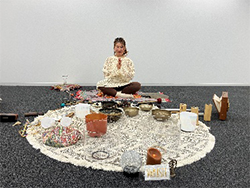
In the fiscal year ended March 2026, the Asset Manager conducted a mindfulness training session aimed at improving the performance of its officers and employees and helping them recover from fatigue. The session had participants immerse themselves in the rich overtones produced by instruments from the sound bath (such as singing bowls and crystal bowls) and guided them into a state of deep relaxation to promote physical and mental balance, emotional stability, and brain activation.
Recognized as “2026 Outstanding Organization of KENKO Investment for Health (SME Category)” and “Bright 500”
For the fourth consecutive year, the Asset Manager was certified as “2026 Outstanding Organization of KENKO Investment for Health (SME Category)” by the Ministry of Economy, Trade and Industry in recognition of its various efforts in the field of health management such as management philosophy and guidelines and organizational structure, its measures to maintain and promote employee health, and its initiatives regarding legal compliance and risk management, etc. In addition, for the fourth consecutive year, the Asset Manager was certified as one of the “Bright 500,” the top 500 corporations in the Outstanding Organizations of KENKO Investment for Health (SME Category).
Office Environment Improvement
Seeking to provide a pleasant workplace environment for all officers and employees, the Asset Manager have introduced and installed the following:
- Telecommuting system
- Provision of laptop computers
- System for choosing working hours
- Multiple large humidifiers
- Large monitors in each conference room